If you have been searching who does dental implants, you are not alone. It is one of the most common questions people ask when they begin looking into tooth replacement. Dental implants are a major investment in your health, your comfort, and your confidence, so it makes sense to want more than a vague answer. You want to know exactly what kind of dentist places implants, what qualifications matter, and how to tell whether you are in capable hands.
The short answer is this: several types of dental professionals may perform dental implant treatment, but the best qualified provider is the one with the right training, experience, technology, and treatment-planning skill for your specific case. That may be a general dentist with advanced implant training, a periodontist, an oral surgeon, or a prosthodontist. In many cases, the strongest outcome comes from a dentist who can see the entire picture, from bone support to bite alignment to the final look of your smile.
At a practice like Shallowford Dental Studio in Roswell, GA, that kind of whole-smile thinking matters. Dental implants are not just about putting a screw in the jawbone. They are about restoring function, protecting long-term oral health, and creating a result that feels natural when you talk, chew, and smile. A successful implant should not feel like a patch. It should feel like your mouth has found its footing again.
What Does a Dental Implant Provider Actually Do?
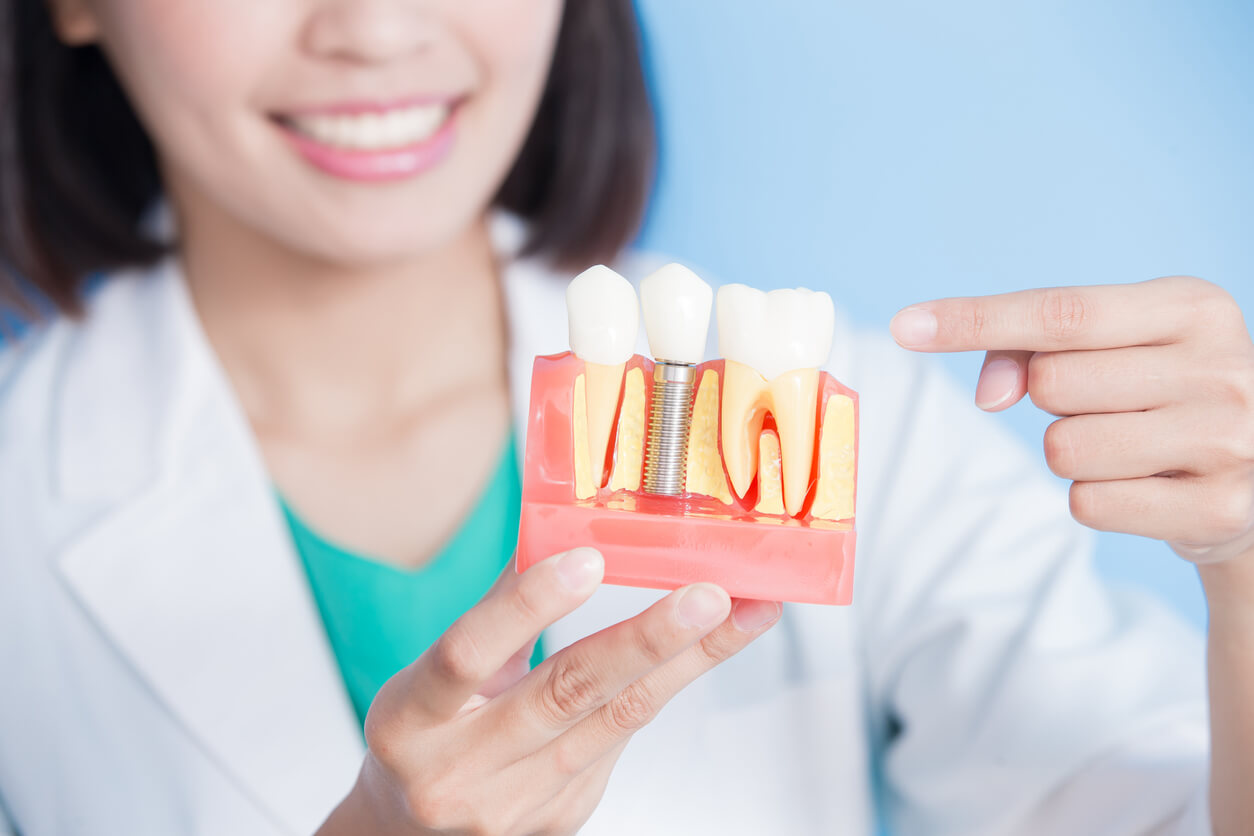
Before talking about qualifications, it helps to understand what implant treatment really involves. A dental implant is a small titanium post that is placed in the jawbone to act like an artificial tooth root. After healing, that implant can support a dental crown, bridge, or denture. It is one of the most stable and long-lasting ways to replace missing teeth.
But the procedure itself is only one chapter in the story. A qualified implant dentist evaluates bone density, gum health, bite forces, neighboring teeth, medical history, and cosmetic goals before treatment ever begins. If the foundation is weak, the implant may fail. If the bite is off, the implant may be overloaded. If the placement angle is wrong, even a high-quality crown can look unnatural. Implant dentistry is part surgery, part engineering, and part artistry.
That is why asking who does dental implants is really asking a bigger question: who can do them well, safely, and predictably?
Which Dental Professionals Can Perform Dental Implants?
More than one type of dentist may be involved in implant treatment. This surprises many patients, but it is completely normal. Dental implants sit at the intersection of surgery and restoration, so different professionals may bring different strengths to the process.
A general dentist may place and restore implants if they have completed advanced training in implant dentistry. Many modern dental practices offer implant treatment in-house, especially when the dentist has invested heavily in continuing education, digital imaging, and surgical planning. For straightforward cases, a highly trained general dentist can often handle the process from start to finish.
A periodontist specializes in the gums and supporting bone around the teeth. Since implants depend on healthy gum tissue and strong bone support, periodontists are frequently involved in implant placement, especially in cases involving gum disease or bone loss. If your mouth has been through some wear and tear, a periodontist may be part of your treatment plan.
An oral and maxillofacial surgeon is trained in surgical procedures involving the mouth, jaw, and face. Oral surgeons often place implants in complex cases, particularly when extractions, bone grafting, sinus lifts, or impacted teeth are involved. If your situation has a surgical wrinkle to it, this specialist may be the right fit.
A prosthodontist focuses on restoring and replacing teeth. They are especially skilled in designing the visible part of the implant restoration, such as crowns, bridges, and implant-supported dentures. If your case involves multiple missing teeth or a full-arch restoration, prosthodontic expertise can be extremely valuable.
The key point is this: credentials matter, but case-specific experience matters just as much. A dentist who routinely plans and completes implant cases with excellent outcomes is often a stronger choice than someone with a specialist title but limited involvement in your type of restoration.
So, Who Is Best Qualified to Do Dental Implants?
The best qualified person to do dental implants is the provider who combines implant training, hands-on experience, diagnostic technology, and a strong understanding of restorative dentistry. That answer may sound less tidy than people want, but it is more honest.
Think of it like building a house. You do not just want someone who knows how to pour concrete. You want someone who understands the blueprint, the soil, the structure, and how every part fits together once people are actually living inside it. Dental implants work the same way. The implant post is only one piece. The final bite, gum contour, comfort, and appearance are what make the result successful.
For many patients, the ideal provider is a dentist who can either perform the entire treatment confidently or coordinate seamlessly with trusted specialists. In other words, the best implant care is not about ego. It is about precision, planning, and knowing when collaboration leads to a better outcome.
What Qualifications Should You Look For?
If you are comparing providers, do not stop at the phrase “we offer dental implants.” That tells you almost nothing. A much better question is: what training and systems support your implant process?
Look for a dentist who has completed continuing education focused specifically on implant placement and restoration. Implant dentistry evolves quickly, and a provider who stays current is usually more prepared to deliver modern, evidence-based care. This is especially important because techniques, materials, and digital planning tools have improved dramatically in recent years.
You should also ask how often the dentist performs implant cases. Repetition builds judgment. A provider who regularly evaluates bone levels, manages healing timelines, and restores implants under real-world conditions develops a sharper eye than someone who only handles them occasionally. Experience is not just about the number of years in practice. It is about the number of relevant cases successfully treated.
Technology matters too. 3D cone beam imaging, digital scans, and guided implant planning can make treatment safer and more precise. These tools help the dentist evaluate bone volume, locate nerves and sinuses, and determine the ideal implant position before surgery begins. That level of planning is not flashy for the sake of being flashy. It reduces guesswork.
Finally, look at the dentist’s philosophy. The right provider should care about more than placing the implant. They should talk with you about long-term maintenance, gum health, bite balance, and the final appearance of your restoration. If the consultation feels rushed or one-dimensional, that is a red flag.
Why Experience With Both Surgery and Restoration Matters
One of the most overlooked parts of implant dentistry is the difference between placing an implant and restoring it. Some providers focus mainly on the surgical side. Others focus mainly on the crown, bridge, or denture that attaches to the implant. The strongest results happen when both phases are planned together from the beginning.
Imagine hanging a door before checking whether the frame is square. You may technically get the door installed, but it will stick, swing wrong, or leave gaps. Implants can run into similar problems when placement is done without enough attention to the final restoration. The implant may integrate with the bone just fine, but if it sits at the wrong angle or depth, the visible tooth may be harder to clean, less attractive, or more prone to mechanical stress.
That is why many patients benefit from working with a dentist who understands the complete process. At Shallowford Dental Studio, restorative and cosmetic outcomes are part of the conversation, not an afterthought. That matters because a dental implant should not only be secure in the jaw. It should also feel natural in your bite and blend into your smile without looking bulky, awkward, or out of place.
Are General Dentists Qualified to Do Dental Implants?
Yes, some general dentists are absolutely qualified to do dental implants. The important word is some. A dental degree alone does not automatically mean every general dentist has the same implant training or clinical comfort level.
Many general dentists pursue extensive postdoctoral education in implant dentistry and become highly skilled in both placement and restoration. For patients, this can be a major advantage. It often means your care is more streamlined, your treatment is coordinated under one roof, and the dentist overseeing your smile understands both the function and aesthetics of the final result.
That said, not every case belongs in a one-size-fits-all box. If you have severe bone loss, active periodontal disease, complex medical issues, or need multiple procedures such as bone grafting, your dentist may recommend involving a specialist. That is not a sign of weakness. It is a sign of sound clinical judgment.
The best providers know their strengths, understand the limits of a given case, and build the right team when necessary. Confidence is good. Precision is better.
When Should a Specialist Be Involved?
There are certain situations where specialist involvement may be especially beneficial. If you have been missing teeth for a long time, the jawbone may have shrunk in that area. In those cases, bone grafting may be needed before an implant can be placed securely. A provider with strong surgical experience is essential here.
Patients with advanced gum disease may also need specialized periodontal care before moving forward with implants. Healthy gums are not window dressing. They are part of the support system. Placing an implant into an unhealthy environment is like planting a post in wet, unstable soil.
Complex bite issues, multiple missing teeth, full-mouth rehabilitation, and implant-supported dentures may also call for a more collaborative approach. In these cases, the best-qualified provider may actually be a coordinated team that includes a restorative dentist and a surgical specialist.
The goal is not to make treatment more complicated than it needs to be. The goal is to match the complexity of the case with the right level of expertise.
Questions to Ask Before Choosing an Implant Dentist
If you are trying to decide who should do your dental implants, ask direct questions. You are not being difficult. You are doing your homework.
Ask how many implant cases the dentist handles each year. Ask whether they place the implant, restore it, or both. Ask whether your case requires 3D imaging or bone grafting. Ask what happens if complications arise. Ask to see before-and-after cases if available. Ask how the final crown or bridge will be designed to fit your bite and smile.
You should also ask about follow-up care. A quality implant is not a set-it-and-forget-it device. It still needs maintenance, cleanings, and periodic evaluation. The right provider will explain how to care for your implant and how to protect it for the long haul.
Most importantly, pay attention to how the dentist communicates. A good implant consultation should feel clear, grounded, and personalized. You should leave with a better understanding of your options, not a sales pitch wrapped in clinical language.
Why Local Patients in Roswell, GA Should Be Selective
If you are looking for dental implants in Roswell, GA, convenience matters, but it should never be the only factor. Implant treatment unfolds over time. You may need imaging, planning, surgery, healing checks, and final restoration appointments. Choosing a local dentist you trust can make the process easier and more consistent.
For patients in Roswell, Cobb County, and Fulton County, it helps to work with a dental office that values both advanced care and patient comfort. That balance is where confidence grows. Implant treatment can feel intimidating at first, especially if you have been living with a missing tooth for a while or have had a bad dental experience in the past. The right office makes the process feel less like a leap and more like a well-marked path.
At Shallowford Dental Studio, the focus on personalized care, modern technology, and long-term outcomes reflects exactly what patients should be looking for when asking who does dental implants. Not just someone who can complete the procedure, but someone who can guide the entire process with skill and clarity.
The Bottom Line
So, who is best qualified to do dental implants? The best answer is: a dental professional with advanced implant training, meaningful case experience, strong diagnostic tools, and a clear plan for both the surgical and restorative phases of treatment.
That provider may be a highly trained general dentist, a periodontist, an oral surgeon, a prosthodontist, or a team working together. What matters most is not the label alone. It is whether the person treating you can build a stable foundation, protect your oral health, and create a result that looks and functions like it belongs there.
Dental implants are one of the closest things modern dentistry has to a second chance. They can restore far more than a missing tooth. They can bring back comfort at meals, confidence in conversation, and the quiet relief of not having to think about that gap every time you smile.
If you are exploring your options for dental implants in Roswell, GA, the next step is simple: schedule a consultation with a trusted provider who will evaluate your needs carefully and explain your options honestly. With the right hands and the right plan, an implant does not just replace what was lost. It helps rebuild what was interrupted.