
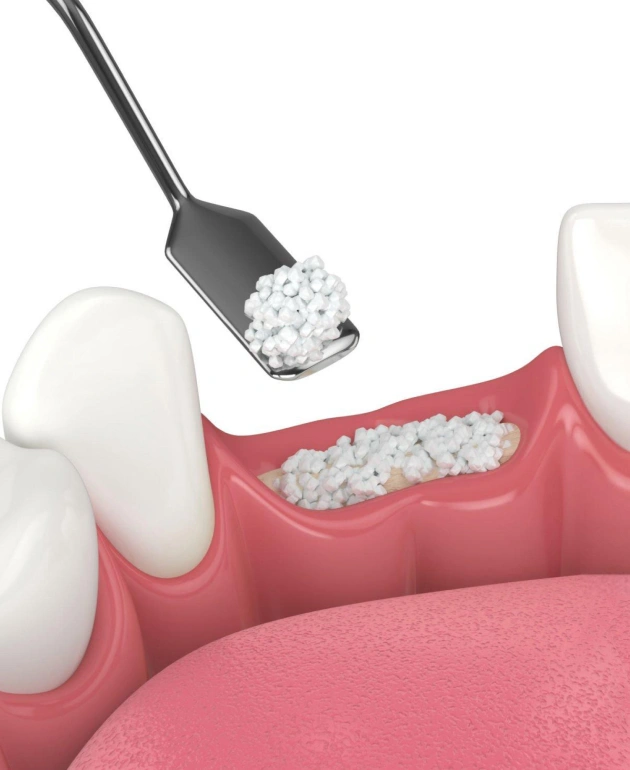
Strengthening Dental Implants with Bone Grafting
Bone grafting is a procedure that rebuilds lost jawbone to support dental implants and other restorative treatment. For a dental implant to be successful, the jawbone must possess adequate height, depth, and width. If the jawbone has receded or sustained damage, the implant may lack stability and security. The American Association of Oral and Maxillofacial Surgeons notes that a jaw that is too thin or soft to hold an implant may need a graft first. At Shallowford Dental Studio in Roswell, Georgia, bone grafting can help create a stable foundation for implants and other restorations.
Common Causes of Jawbone Damage
- Tooth Extraction: When a tooth is removed without a replacement, it can lead to several issues, such as shifting teeth and jawbone recession. This bone loss is referred to as a bone defect.
- Injury: Trauma from a blow to the jaw or other physical injuries can cause jawbone recession.
- Infection: Persistent mouth infections can lead to receding jawbone over time.
- Periodontal Disease: This condition affects the jawbone progressively. If not treated promptly, the infected areas can worsen, causing teeth to loosen from the bone and become unstable.
By addressing these issues with bone grafting, we aim to rebuild your jawbone so it can better support a dental implant. If you have any concerns about your oral health, our team is here to provide guidance and effective treatment options.
Why Consider Bone Grafting in Roswell, GA?
If you are missing teeth or have lost jawbone, a dentist in Roswell, GA, can evaluate your jawbone and explain whether a graft is right for you. Dr. Lucy Sedrakyan, DMD, and our team can walk you through your options. Bone grafting can help counter the effects of diseased teeth or deformities by rebuilding the jawbone's height and width and filling voids or defects.
Here are two key ways bone grafting improves dental health:
- Stabilizes the Jaw: A solid foundation is essential for successful restorative or implant surgery. A graft adds bone where it is needed so teeth or implants can be anchored more securely.
- Preserves Teeth and Jaw Health: Bone grafting helps prevent further damage to teeth and the jaw that can result from disease, infection, tooth extraction, or other dental procedures.
If you're facing challenges related to your jawbone health, our team is here to help you explore the benefits of bone grafting as part of your treatment plan.
The Process of Bone Grafting
The process of bone grafting begins with a comprehensive oral examination, during which the dentist evaluates the affected area of the mouth. This assessment helps determine the overall condition of the teeth and gums, allowing for an informed treatment plan. If periodontal disease or issues with the surrounding teeth are identified, those concerns will be addressed first. Additionally, panoramic X-rays are taken to measure the existing bone's depth and width accurately. If needed, a CAT scan may also be performed for a clearer view of the jawbone's condition. Once all results are reviewed, the dentist will numb the area to explore the gums and determine the type and amount of bone required for the graft.
What Does Bone Grafting Involve?
Bone grafting can involve several types, and your dentist will recommend the most suitable option based on your specific condition:
- Autogenous Bone Graft: This type is harvested from your own body, typically from the posterior part of the lower jaw or the chin. It is often preferred due to its reliable results.
- Allograft and Synthetic Grafts: An allograft uses donor bone from a licensed bone bank, while a synthetic graft uses a lab-made material.
- Xenograft: This type utilizes bone sourced from cows.
Healing after a bone graft can take several months, and your dentist will tell you when the site is ready for an implant. Depending on the type of graft, the bone may come from your own body, a donor bone bank, an animal source, or a lab-made material. Once added to the affected area, the grafted bone fuses with the existing bone, promoting cell migration that encourages firm adhesion and growth. By rebuilding areas affected by bone loss, bone grafting creates the stable foundation needed for dental implant treatment.
What to Expect During Bone Grafting Surgery
During the surgery, the dentist will numb the grafting and extraction sites with a local anesthetic. A small incision is made to prepare the area for the new bone, which is then anchored in place. In some cases, a synthetic membrane may be used to cover the new bone, helping to prevent soft tissue and bacterial invasion while promoting new bone growth.
The procedure does not require an overnight stay, and you will receive detailed post-operative care instructions. The dentist may also prescribe medications to manage infection, discomfort, and swelling.
If it’s time for a dental exam or you have concerns about your jawbone health, contact our Roswell, Georgia office or call (470) 970-4111 to schedule an exam.

